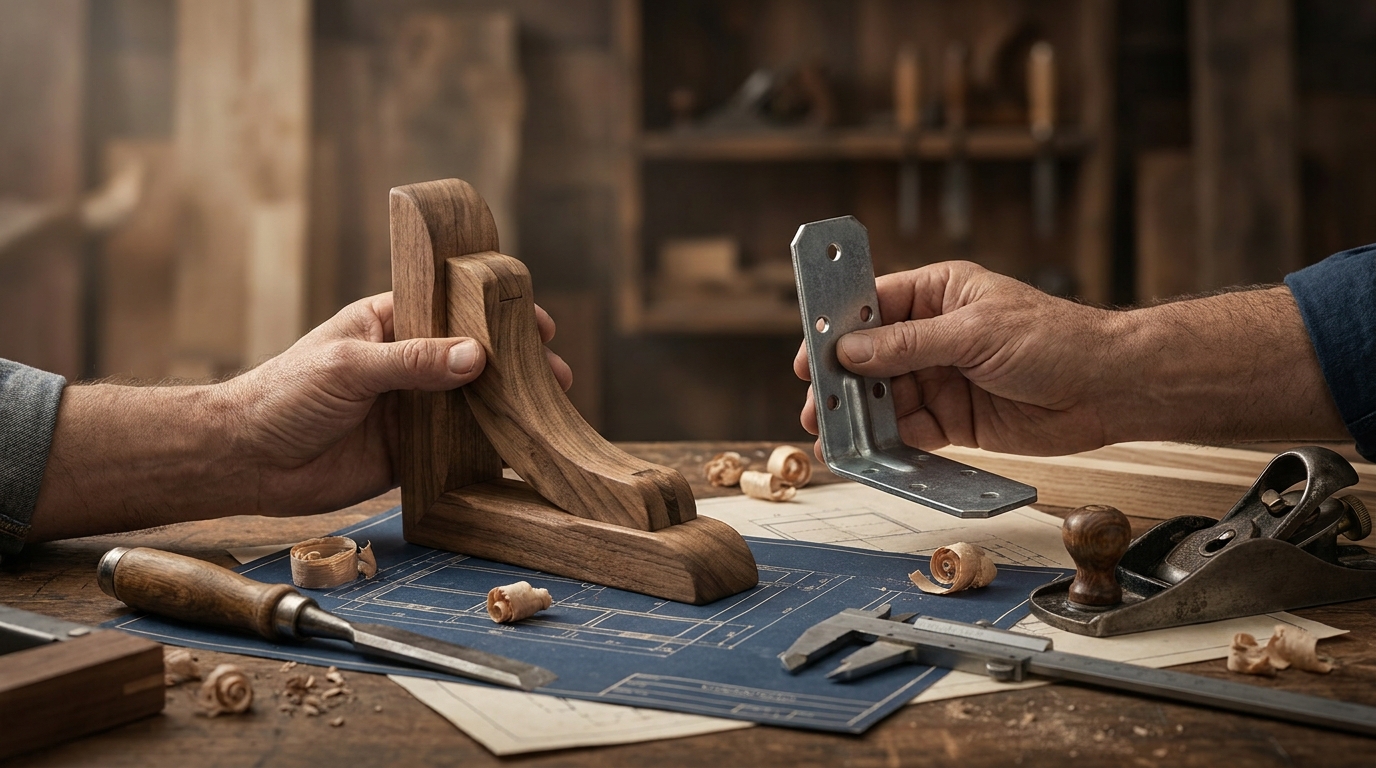

Custom CRM development is the process of building customer relationship software tailored to your exact operational data model, rather than forcing your workflows into off-the-shelf platforms. You commission a custom build when your business logic is too complex for standard tools or when the CRM itself drives your competitive advantage.

What is custom CRM development?
Custom CRM development means engineering a proprietary system to manage customer data, sales pipelines, and interactions. Instead of renting a generic platform, you own the codebase. This allows you to define the exact data structures, integrations, and automation rules your specific operation requires.
Most companies start with standard crm software. They map their sales process to standard objects like Leads and Opportunities and get to work. But as a business scales, standard objects break down. If you run a logistics company, your primary object is a freight load, not a person. If you run a marketplace, you have multi-sided relationships that standard platforms struggle to map. This is where custom development comes in. You build software around your business, rather than changing your business to fit the software.
Can I develop my own CRM?
You can develop your own CRM if you have a clear understanding of your unique data model and the engineering resources to maintain it. Building requires defining your exact workflows, designing a scalable database, and committing to ongoing maintenance rather than relying on a vendor.
The decision to build versus buy usually comes down to workflow friction. Off-the-shelf hubspot crm software is excellent for standard B2B sales. But if you spend more time fighting the platform's limitations than closing deals, a custom crm system becomes a viable alternative. Before writing a line of code, review our CRM implementation guide to ensure you actually need custom software and not just a better configuration of your current tool.
When evaluating the build vs buy decision, consider these fundamental tradeoffs:
- Off-the-shelf CRM: Fast deployment, forced standard workflows, ongoing per-seat subscription costs, limited ability to modify core data structures.
- Custom CRM: Slower initial deployment, exact workflow matching, owned asset with no per-seat licensing, requires dedicated engineering maintenance.
The three parts teams consistently underestimate
Teams building a CRM routinely underestimate data migration, role-based access control, and user adoption. Moving dirty data from legacy systems breaks new databases. Building granular permissions takes massive engineering effort. And if the interface is slow, your sales team will simply refuse to use it.
Moving from a small business crm software to a custom build is never a clean export. You will find duplicate records, missing fields, and corrupted data. Mapping this legacy data into a new, stricter database schema requires significant scripting and manual cleanup.
Role-based access control is another major hurdle. Deciding who can see what is easy in theory. Implementing it at the database level so that a junior rep cannot accidentally delete a global account is complex. Finally, adoption is ruthless. Sales reps hate data entry. Your custom interface must be faster and require fewer clicks than the system you are replacing.

Architectural choices and what they commit you to
Your architectural choices dictate how easily your CRM scales. Choosing a relational database locks you into strict schemas, while graph databases handle complex relationships better. Decoupling the frontend from the backend allows you to swap interfaces later without rebuilding the core logic.
A scalable CRM relies heavily on your backend architecture. Your backend development services partner should prioritize an API-first design. This means the core logic and database communicate with the user interface through application programming interfaces. This approach allows you to build a web interface today and a mobile app tomorrow without rewriting the underlying business rules.
Database selection is equally critical. Most CRMs use relational databases like PostgreSQL. This works well for structured data. However, if your business relies on highly interconnected data networks, a graph database might be necessary to query those connections efficiently.
Can I build my own CRM with AI?
You can build a CRM with AI by integrating large language models to automate data entry, summarize call transcripts, and trigger workflows. However, AI cannot replace the foundational database architecture. The AI layer must sit on top of clean, structured, and well-governed relational data.
Everyone wants an AI-powered CRM. The reality is that AI agents are only as good as the data they access. If you plan to use AI automation services to draft emails or update records, your database must be pristine. An AI model hallucinating a client update because it read a duplicated, outdated record will destroy trust in the system immediately.
How to tell a capable build partner from a weak one
A capable development partner will challenge your feature requests and focus on your core data model. Weak partners will say yes to every feature, leading to bloated software. Ask them how they handle data migration and what their testing protocol looks like for complex permissions.
When interviewing development shops, ignore the sales pitch and focus on their engineering process. Ask them how they handle schema changes after the initial launch. A good partner will explain their migration strategy and version control. Ask them to walk you through their approach to role-based access control. If their answer is vague, they have likely never built an enterprise-grade system.
How much does it cost to build a custom CRM?
The investment required to build a custom CRM depends entirely on the complexity of your data model, the number of third-party integrations, and your security requirements. A basic pipeline tracker requires significantly fewer engineering hours than an enterprise system with automated workflows and granular permissions.
Scope dictates the engineering effort. Connecting your new build to existing financial systems requires understanding the boundary between ERP vs CRM software. Every integration with an external billing platform, marketing automation tool, or inventory system adds layers of complexity and testing time. The goal is to build the minimum viable workflows first, prove adoption, and then expand the feature set.
Building a custom CRM is a major operational commitment. It requires mapping your exact workflows and engineering a system that your team will actually want to use. If you are hitting the limits of off-the-shelf platforms and need to explore a custom build, book a call with our custom software development team to map out the architecture.
Maurizio Cavalieri is the Founder & CEO of LevelThree Co, established in 2019, he has worked in the industry for over 13 years developing software.
LinkedInFrequently asked questions
Can I develop my own CRM?
Yes, you can develop your own CRM if your business logic is too complex for standard platforms. It requires defining your specific data model, designing a scalable database, and having the engineering resources to maintain the codebase.
What is custom CRM development?
Custom CRM development is the process of engineering a proprietary system to manage customer data and sales pipelines. It allows you to build software that matches your exact operational workflows rather than forcing your process into an off-the-shelf tool.
How much does it cost to build a custom CRM?
The required investment depends on the complexity of your data model and the number of third-party integrations. A simple pipeline tracker takes far fewer engineering hours than a system with complex role-based access and automated workflows.
Can I build my own CRM with AI?
Yes, you can integrate AI to summarize calls and automate data entry. However, the AI layer must be built on top of a highly structured, clean relational database to function accurately.
Sources
Signals, not noise.
- Field notes from real client builds
- Pricing, process & AI takes, unfiltered
- No spam. Unsubscribe in one click.